Articles
How to Pick a Ripe Watermelon or Melon
2025-07-16
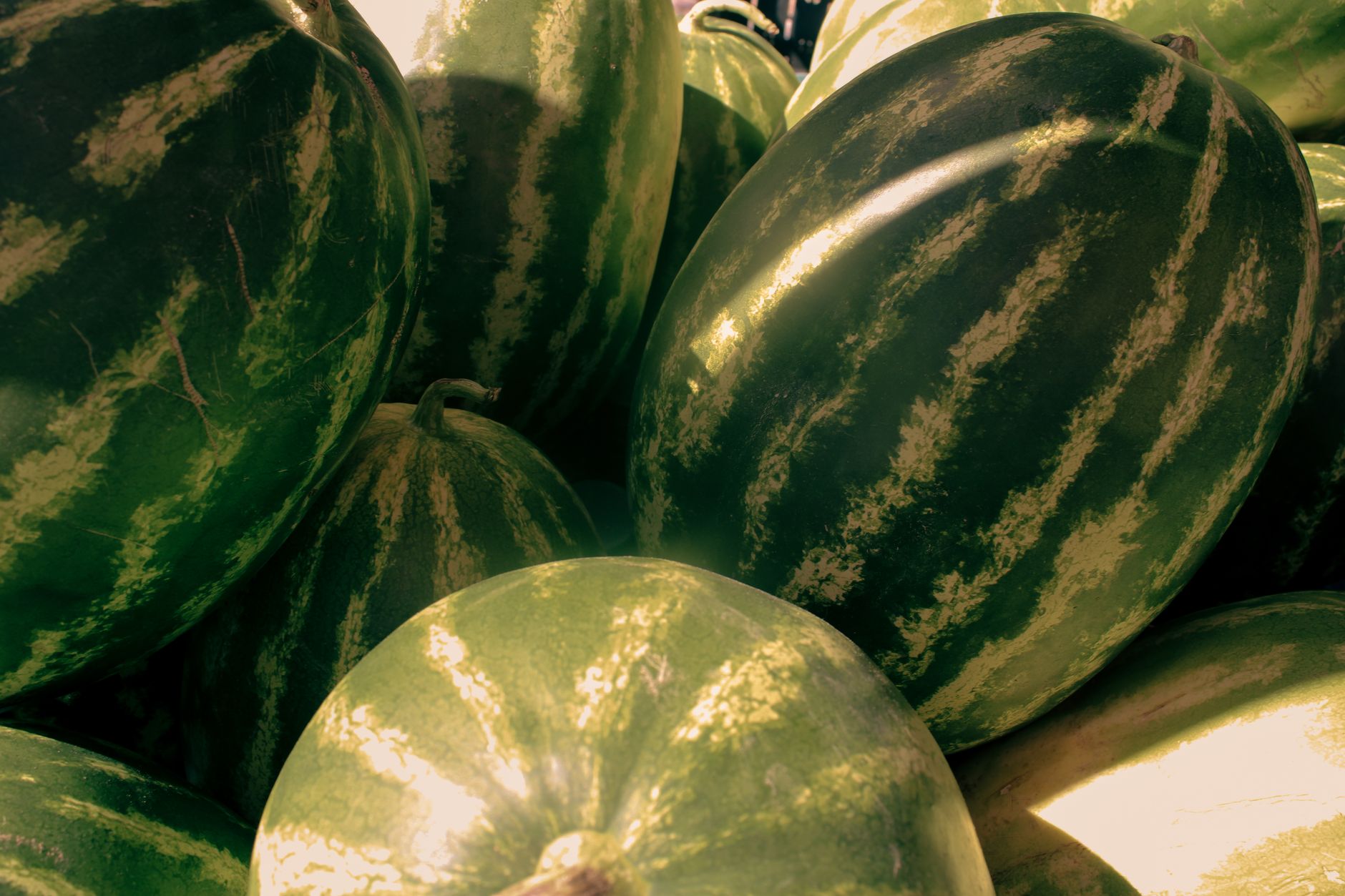
Picking watermelons and melons in season always feels like a bit of a gamble if you don’t know what signs to look for. You usually can’t cut the fruit open before buying, so you’re left relying on appearance, weight, sound, and smell. None of these signs guarantees perfect ripeness on its own, but together they meaningfully improve your odds of bringing home something actually sweet.
How to pick a watermelon
The first thing to check is the field spot — the patch on the watermelon’s skin where it rested on the ground while ripening. On a ripe watermelon, this spot is creamy yellow or orange; a pale, almost white spot usually means the fruit was picked too early. The rind on a ripe watermelon tends to look matte rather than glossy, and the stripe pattern should be sharp and well-defined.
The stem is another useful clue: on a ripe watermelon it looks dried out and browned rather than green and fresh. A classic trick is to knock on the watermelon with your knuckles — a ripe one gives a deep, hollow, resonant sound, as if there’s empty space inside, while an underripe one sounds more solid and higher-pitched. Finally, a good watermelon should feel surprisingly heavy for its size, which points to a high water and flesh content.
How to pick a melon
Melons rely on a different set of cues, and the most important one is smell. A ripe melon, especially varieties like cantaloupe, gives off a distinct sweet, slightly floral aroma near the stem end that you can often notice from a few centimeters away. If there’s no smell at all, the melon is likely still underripe.
Try pressing gently with your thumb on the blossom end, opposite the stem: a ripe melon should give slightly there, while the rest of the rind stays firm. On some varieties, the stem itself pulls away from the fruit or is already partly detached at full ripeness — a reliable sign when present, though many hybrid varieties don’t show this effect, so it’s best to weigh all the signs together rather than rely on just one.
When to buy
Watermelons and melons hit peak seasonal sweetness in the height of summer and into early fall, once the fruit has had a full stretch of warm weather to build up sugar. Buying right at the very start of the season, when the first fruits appear on stands, tends to be disappointing: early watermelons and melons are often pushed to ripen faster or picked before they’re fully ready to meet early demand. A safer bet is to hold off and buy closer to the middle or tail end of the season, when supply has stabilized and average quality tends to be higher.
Checking at home if you’re still unsure
If you’re still not confident even after checking at the market, there’s a simple way to double-check a melon at home without cutting into it: smell it near the stem end away from the market’s ambient noise and competing smells, which makes the aroma of a ripe fruit much easier to notice. That trick doesn’t really work for watermelon, so with those you’re stuck relying on the visual and sound cues chosen beforehand. If a watermelon or melon does turn out to be underripe, it will continue to soften a bit at room temperature, though this mostly affects the texture of the flesh rather than making it noticeably sweeter — melons and watermelons don’t keep accumulating sugar once picked.
Storing after you buy
A whole watermelon or melon is best kept at room temperature if you plan to eat it within a few days — the flavor tends to be more pronounced than when the fruit is served cold straight from the fridge. It makes sense to chill it only shortly before serving. Once cut, though, refrigeration becomes essential: cut watermelon and melon spoil quickly at room temperature and should be wrapped tightly or kept in a sealed container in the fridge for no more than a few days.
What not to rely on
Size is a poor indicator — both large and small watermelons or melons can be equally sweet depending on the variety. Shape isn’t a reliable signal either — an elongated and a nearly round watermelon of the same variety can be equally good, since shape has more to do with the cultivar and growing conditions than with ripeness. It’s also worth remembering that even all these signs combined don’t offer a complete guarantee; sometimes a fruit that looks perfectly ripe turns out underwhelming inside, and that’s just a normal part of buying seasonal produce at the market.
 Share via email