Articles
Bananas: Benefits and Calories
2025-08-25
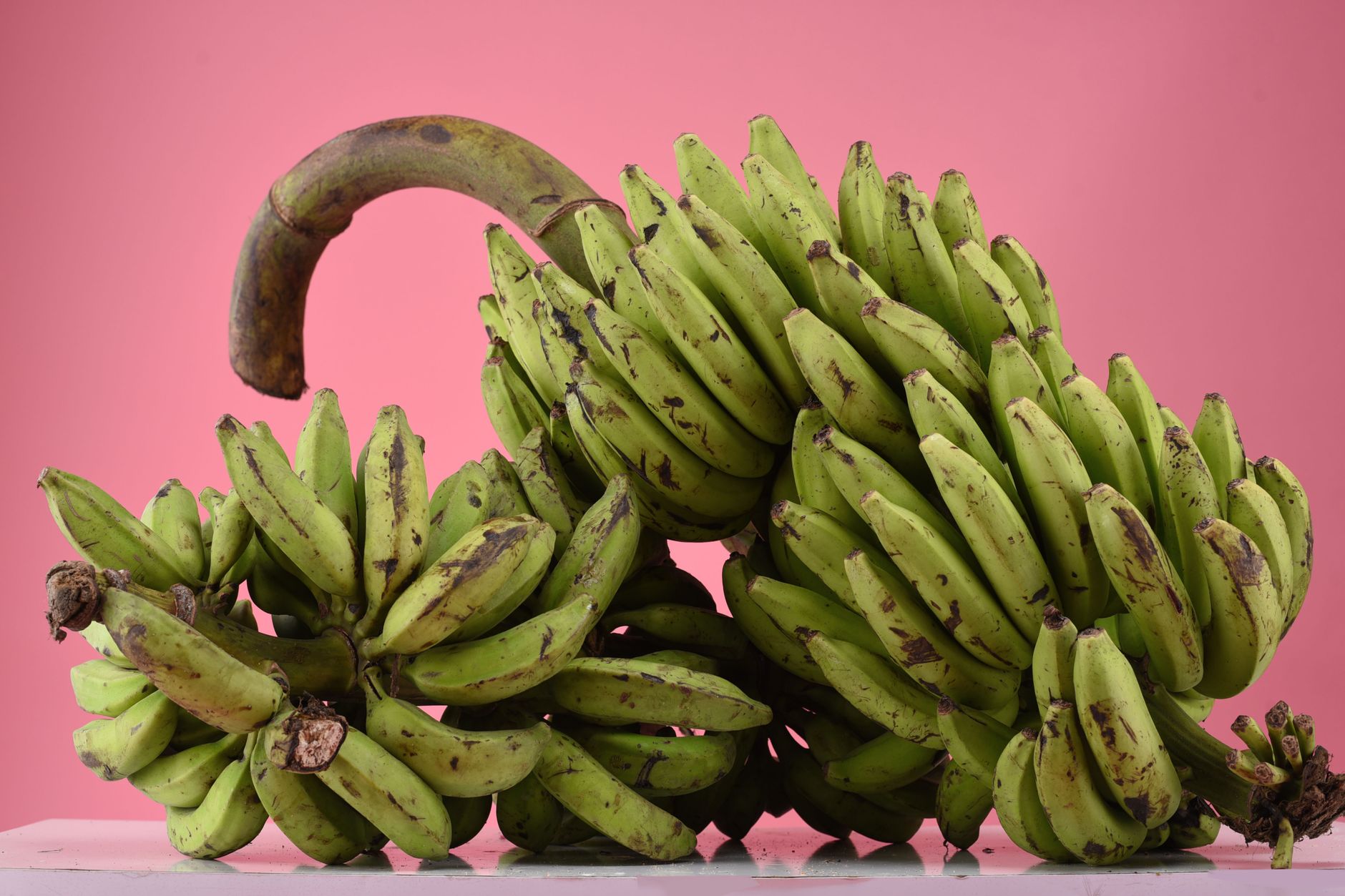
The banana is one of the most convenient fruits around: no washing required, available year-round, and equally at home in a breakfast bowl or as a pre-workout snack. Its calorie count and health reputation, though, get oversimplified more often than they deserve.
How many calories are in a banana
A medium banana (roughly 118-120 g once peeled) has about 100-105 calories. The calorie count creeps up slightly as the banana ripens: riper, sweeter bananas carry a higher share of simple sugars, which nudges the calorie count for the same weight a bit higher than a greener, less ripe banana.
Carbohydrates and energy
Bananas are, above all, a carbohydrate food, which is exactly why they’re a popular pre-workout snack. In unripe bananas, a good share of those carbohydrates comes as resistant starch, which digests more slowly; as the banana ripens, that starch gradually converts into simple sugars — fructose, glucose, and sucrose. That’s why green bananas taste less sweet and tend to have a milder effect on blood sugar than fully ripe ones.
Potassium and other micronutrients
Bananas are best known for their potassium content, a mineral important for normal muscle function, including the heart muscle, and for maintaining the body’s fluid balance. Alongside potassium, bananas provide vitamin B6, a modest amount of vitamin C, magnesium, and manganese.
Fiber and digestion
Bananas contain a decent amount of fiber, concentrated mostly in the peel and the flesh just beneath it. That fiber, including the resistant starch found in less-ripe bananas, supports a feeling of fullness and helps keep digestion regular. This is part of why slightly green, underripe bananas are sometimes recommended to people who want a slower release of carbohydrates.
Bananas and physical activity
Thanks to the combination of quickly digestible carbohydrates and potassium, bananas are a favorite pre- and post-workout snack among athletes. The carbs provide fast-acting energy, and the potassium helps replace what’s lost through sweat, though a banana alone isn’t a substitute for proper hydration and electrolyte balance during long, intense efforts.
Who should be more careful with bananas
Because of their relatively high carbohydrate and potassium content, bananas are worth factoring into the bigger picture of the diet for people with diabetes, who need to track total carbohydrate intake per meal, and for anyone medically advised to limit potassium, such as some people with kidney disease. For most everyone else, a banana remains one of the more harmless, nutrient-dense snacks available almost anywhere.
Green versus fully ripe
The difference between a green banana and a fully ripe, spotted one is more than just a matter of taste. As a banana ripens, its starch converts into sugar, the flesh softens and sweetens, but fiber and resistant starch content drop along the way. That makes a slightly underripe banana a sensible choice if you want a slower carbohydrate release and a gentler effect on blood sugar, while a fully ripe banana is better suited to anyone who wants quick, easily digestible energy, such as right after an intense workout.
Bananas as part of a balanced snack
On its own, a banana is mostly carbohydrate and provides very little protein or fat, so it doesn’t keep you full as long as a snack that includes some protein alongside it. Pairing a banana with a handful of nuts, a spoonful of plain yogurt, or peanut butter turns it into a more balanced snack — one that still delivers quick energy but keeps you satisfied longer thanks to the added protein and healthy fat.
Getting the most out of bananas
Bananas work well eaten on their own, blended into smoothies, sliced into oatmeal or yogurt, and baked into breads and muffins, where very ripe, spotted bananas are actually preferred — they’re sweeter and help keep the finished bake moist. It’s best to store bananas at room temperature until they ripen, then move ripe ones to the fridge, where the peel will darken but the fruit inside stays fine for several more days.
 Share via email