Articles
Ginger: Properties and Uses
2025-11-03
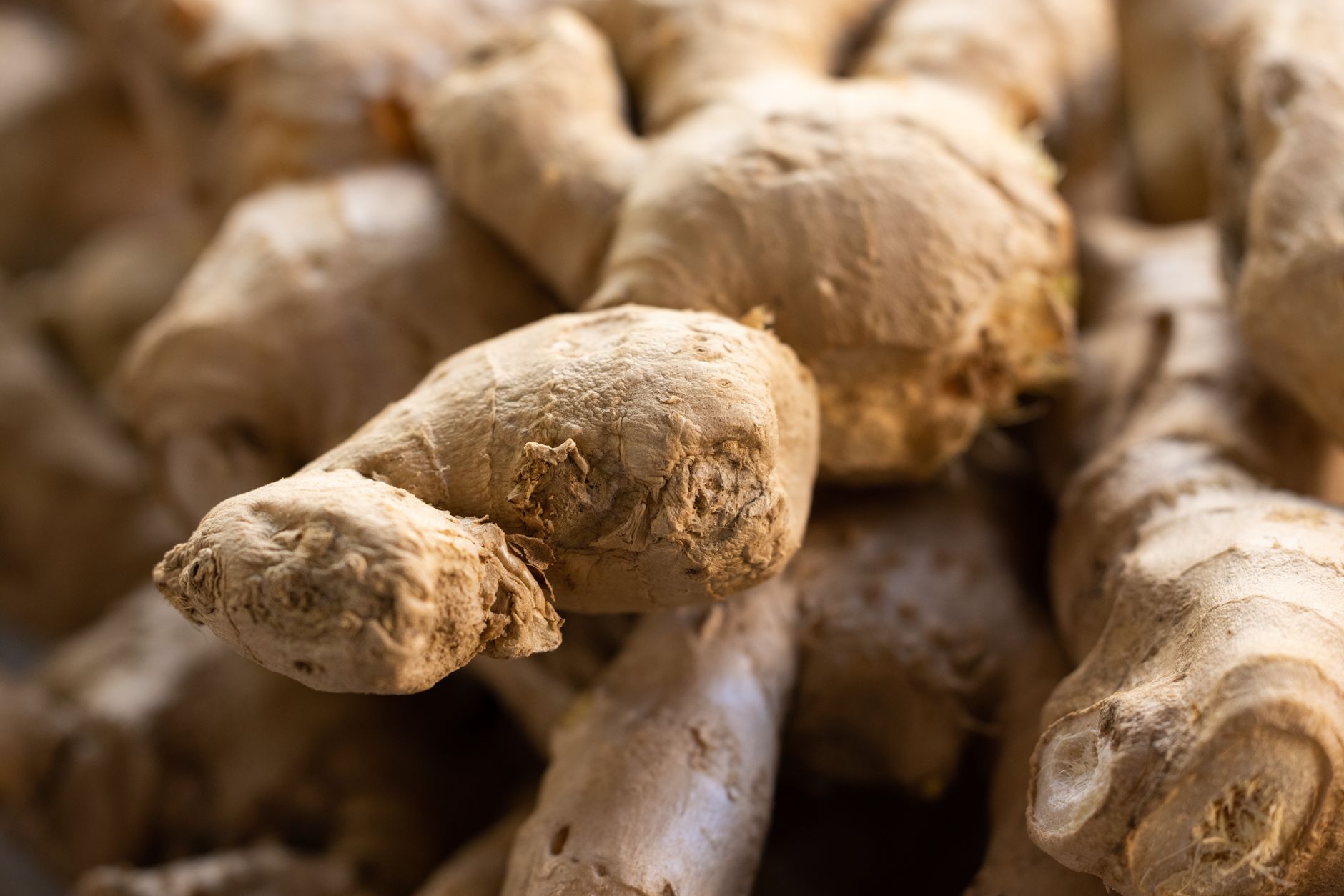
Ginger is one of the rare roots that feels equally at home in the medicine cabinet and on the cutting board. Sharp, fragrant, with a distinctive citrusy-woody note, it long ago spread beyond Asian cooking to become an everyday ingredient — from a mug of tea for a cold to a marinade for grilled meat.
What makes ginger spicy and fragrant
Ginger’s characteristic heat comes from a compound called gingerol, which partially converts to shogaols when heated — these give a sharper, drier bite typical of dried ginger. That’s why fresh root and dried ground ginger taste noticeably different: fresh ginger is juicier and brighter, while dried ginger is hotter and more concentrated. The essential oils that ginger is rich in are responsible for its distinctive sharp, slightly citrusy aroma.
Traditional uses
Ginger has been used for centuries in Asian traditional medicine and cooking, most notably as a remedy believed to ease nausea and digestive upset. Modern research partly supports this — ginger does appear to help with nausea, including motion sickness and pregnancy-related nausea (worth checking dosage with a doctor in that case) — though the exact mechanism isn’t fully understood.
Ginger is also traditionally associated with a warming effect and often shows up in drinks during cold season — not as a substitute for treatment, but as a pleasant addition that can help soothe a scratchy throat.
How to pick fresh ginger
A good ginger root should feel firm to the touch, with no soft spots and no wrinkled skin — those are signs the root has been sitting too long. The skin should be smooth and taut. If you scratch off a bit of skin with a fingernail, fresh ginger should snap cleanly and reveal juicy, slightly fibrous, pale yellow flesh underneath. Ginger that’s dry and overly fibrous at the cut is harder to grate and can taste bitter.
How to store ginger
Fresh ginger keeps reasonably well in the fridge for 2-3 weeks if wrapped in a paper towel or kept in a bag with a few air holes. For longer storage, the whole root can be frozen and grated straight from frozen — no need to thaw first, which is convenient and keeps the root from drying out. Another option is to cover peeled, sliced ginger in rice vinegar with a little sugar, which makes a quick pickled ginger that keeps in the fridge for weeks.
Where ginger works best
In Asian cooking, ginger is one of the foundational aromatics alongside garlic and onion: it goes into marinades for meat and fish, gets sautéed at the start of a dish to build the base of a sauce, and shows up in soups. In baking, ground dried ginger is a core part of gingerbread spice blends alongside cinnamon and cloves. In drinks, fresh ginger is steeped with lemon and honey for tea, or blended into smoothies for a mild kick of heat.
How to use ginger at home
The simplest way to start is a fresh tea: steep a few thin slices of root in hot water for about 10 minutes, then add honey and lemon to taste. For marinades, ginger is usually finely grated or minced together with garlic; for stir-fries, it’s cut into thin matchsticks and added to the oil early so the flavor has time to bloom. It’s easy to overdo it, though — too much ginger quickly overwhelms the rest of a dish, especially in delicate soups and sauces.
 Share via email