Articles
How to Avoid Food Sticking When Frying
2025-11-04
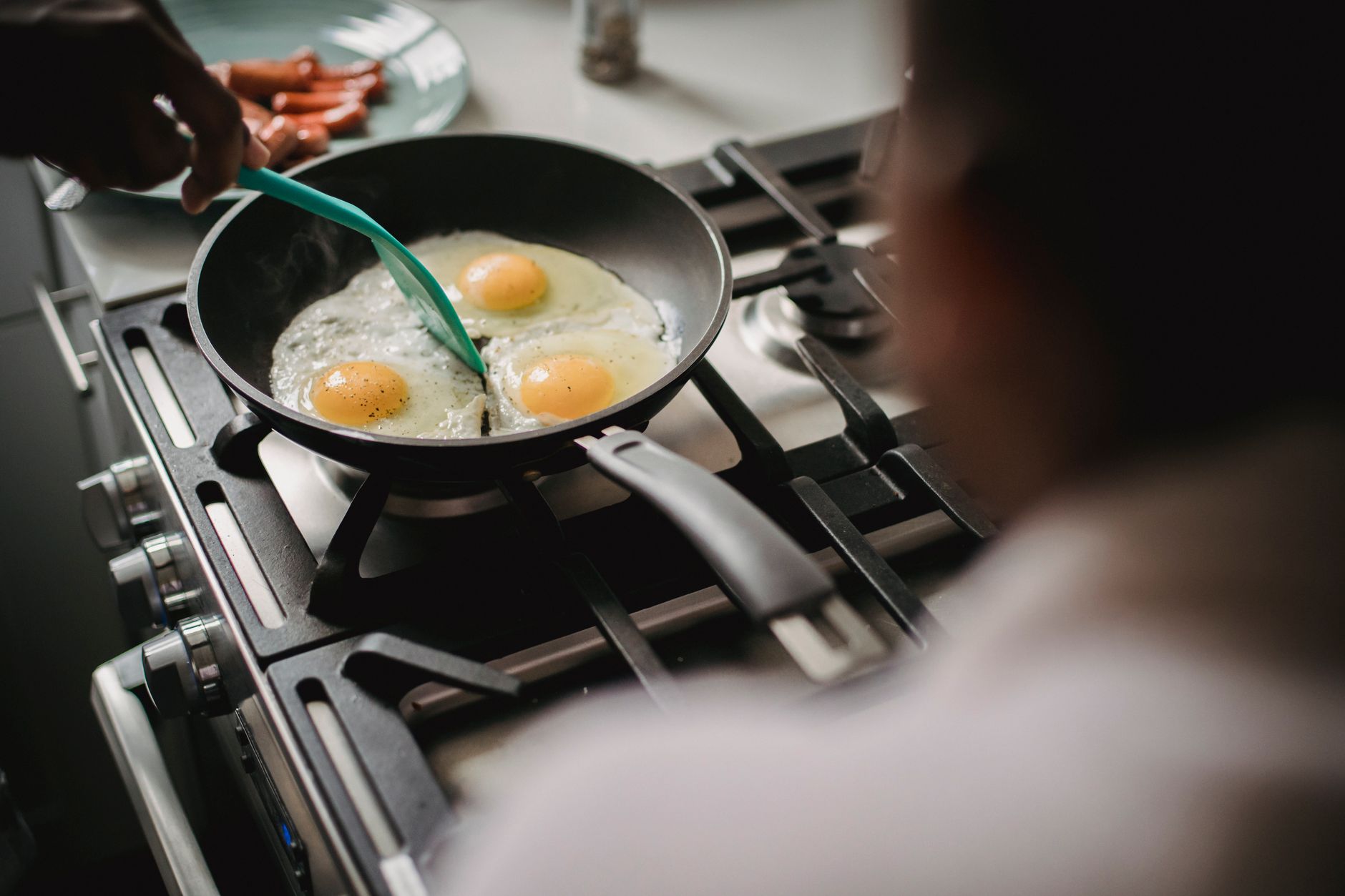
A piece of fish that falls apart the moment you try to flip it, or a burger patty that welds itself to the skillet — anyone who cooks regularly has run into this. Most of the time the problem isn’t clumsy technique or a bad pan, it’s a handful of physical factors that are easy to keep in mind and that change the outcome immediately once you do.
Why food sticks in the first place
Sticking is essentially a form of micro-welding: proteins on the surface of the food come into direct contact with the metal and bond to it before either surface is hot enough to prevent that. Oil between the food and the pan acts as a barrier that stops this direct contact from happening. If there’s too little oil, it’s unevenly spread, or the pan isn’t hot enough yet, those bonds have time to form and the food effectively fuses to the surface. That’s why most sticking happens in the first few seconds after food hits the pan, not later in the cook.
The pan needs to be properly hot
One of the most common mistakes is not preheating the pan enough before adding food. The metal needs to heat evenly across its whole surface, not just in the center — cooler edges become sticking traps. A simple test: a drop of water flicked onto a properly hot pan should skitter across the surface in a bead rather than vanish instantly with a hiss. Oil gives its own signal too — it should shimmer and look glossy but not smoke; smoking oil has already started breaking down and often turns bitter.
A dry surface does most of the work
Moisture is the main enemy of a good sear and the biggest ally of sticking. Pat meat, fish, and vegetables dry with a paper towel before frying — excess surface water turns to steam the instant it hits a hot pan, and that steam gets in the way of proper contact with the oil while also cooling the pan right at the point of contact. This shows up most obviously with fish and ground-meat patties: with a wet surface, they end up steaming rather than searing.
Don’t touch the food too soon
Even on a properly heated pan with enough oil, it’s tempting to nudge or lift a piece right after it goes in. Resist it. In the first minute or two, a crust forms at the boundary between food and pan from caramelized proteins and sugars — this is the Maillard reaction, the same process responsible for browning and deep savory flavor. Until that crust fully develops, the food clings to the pan; once the reaction finishes, it releases on its own. Flip too early and the crust tears, leaving part of the food behind.
Use enough oil, and the right kind
Skimping on oil is a frequent cause of sticking, especially in pans without a nonstick coating. A thin, uneven film of oil leaves dry patches where food grabs immediately. It also matters which oil you reach for: refined vegetable oil or clarified butter tolerate higher heat than unrefined olive oil or regular butter, which start to smoke and lose their protective quality sooner.
The type of pan matters too
Cast iron and carbon steel pans develop a natural nonstick layer over time through proper seasoning with oil, but they demand more careful heat control than pans with a factory nonstick coating. Nonstick pans forgive more mistakes, but they have their own limit — too much heat degrades the coating, and a scratched surface performs worse year after year.
What to do if food does stick
If something sticks in the first few seconds, resist the urge to force it off the pan with a spatula — you’ll likely tear off part of the crust. Give it another minute instead: often the crust finishes forming and releases on its own. If it still won’t budge, check whether there’s enough oil and whether the pan has cooled down — sometimes the fix is simply turning up the heat slightly and waiting a bit longer.
The bottom line
Sticking is almost always the result of several factors lining up at once: an underheated pan, a damp food surface, too little oil, and flipping too soon. Address these one at a time and you can eliminate most sticking problems even on an ordinary pan with no special coating at all.
 Share via email