Articles
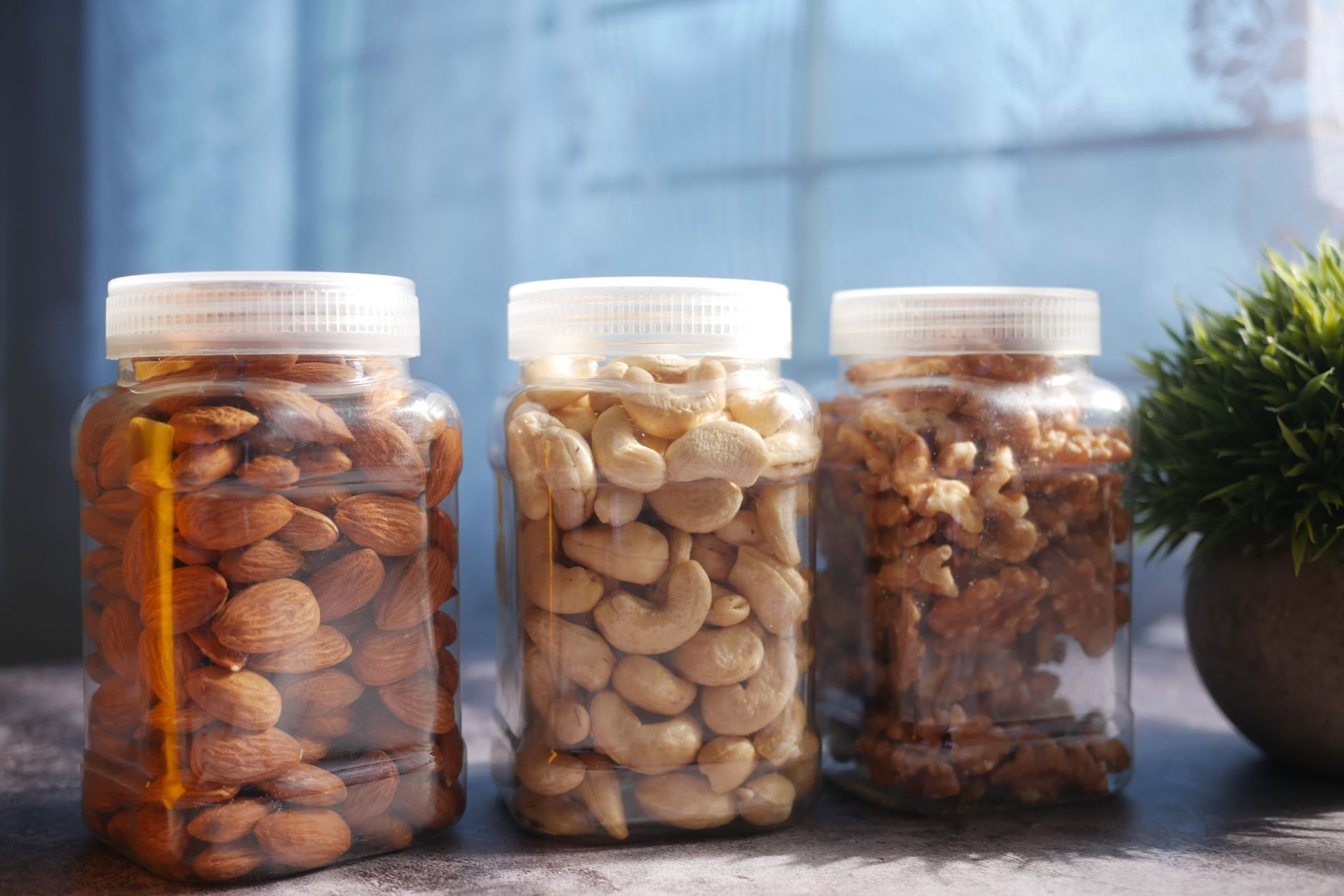
A bitter taste in nuts isn’t a quirk of a particular variety, and it doesn’t mean they were bad to begin with. Almost always it’s a storage problem — the nuts have gone rancid, because they’re unusually rich in fat. Understanding why this happens makes it much easier to pick the right storage conditions and keep nuts fresh far longer.
Why nuts turn bitter
Nuts are high in plant fats, and those fats oxidize over time when exposed to oxygen, light, and heat — a process known as rancidity. Oxidation produces compounds responsible for that unpleasant bitter, faintly “chemical” taste and musty smell. The higher the proportion of unsaturated fat in a given nut, the faster this happens: walnuts and pine nuts turn rancid noticeably quicker than almonds or hazelnuts, whose fat composition resists oxidation better.
Light, heat, and air are the main culprits
Three factors speed up rancidity: light, heat, and exposure to oxygen. Direct sunlight triggers oxidative reactions almost as effectively as high heat, so nuts should never sit in a clear container on a windowsill or near the stove. Heat on its own accelerates oxidation too — the warmer the storage spot, the faster the fats start to break down. And constant contact with air means a constant supply of oxygen, which the oxidation reaction needs to proceed.
The fridge or freezer is the best place to keep them
The most reliable way to slow rancidity is cold storage. In the refrigerator, in a tightly sealed container, shelled nuts stay fresh for several months, and in the freezer they can last a year or longer with almost no loss of flavor or texture. There’s no need to thaw frozen nuts specially before using them — they come to room temperature quickly on their own, or they can go straight into baking and hot dishes.
If fridge or freezer space is tight, nuts can also be kept at room temperature, but shelf life drops considerably — typically one to three months, depending on the type of nut and the conditions in the room.
The container matters
Nuts keep best in an airtight container — a glass jar with a tight lid, a vacuum-sealed container, or a well-sealed bag with as much air pressed out as possible. This limits oxygen exposure and slows oxidation. A clear container is fine only if it’s kept somewhere dark, like a closed cupboard — never on an open shelf or windowsill where light can reach it.
Shelled nuts spoil faster than nuts in the shell
Nuts still in their shell keep far longer than shelled ones — the shell acts as a natural barrier against oxygen and light. If there’s a choice, unshelled nuts are the better option for long-term storage, while shelled nuts are best bought in smaller batches that can realistically be eaten within a reasonable time.
How to tell nuts have gone bad
Rancid nuts are easy to recognize by taste and smell: a bitter, faintly soapy or “paint-like” flavor replaces the usual nutty one, and the aroma turns musty instead of fresh. They can look perfectly normal on the outside, so a visual check isn’t always enough — tasting a single nut before using a whole batch in a dish is the safest approach. Rancid nuts aren’t dangerous in small, occasional amounts, but they noticeably ruin the flavor of whatever they’re added to, so it’s best not to cook with them.
A simple habit to build
The easiest approach is to buy only as many nuts as can realistically be eaten within a month or two, store them in an airtight container in the fridge or freezer, and keep them away from heat and light. That’s enough to avoid the bitter taste altogether and always have fresh nuts on hand for snacking or baking.
 Share via email