Articles
Hard Cheese: How to Choose Quality
2026-01-30
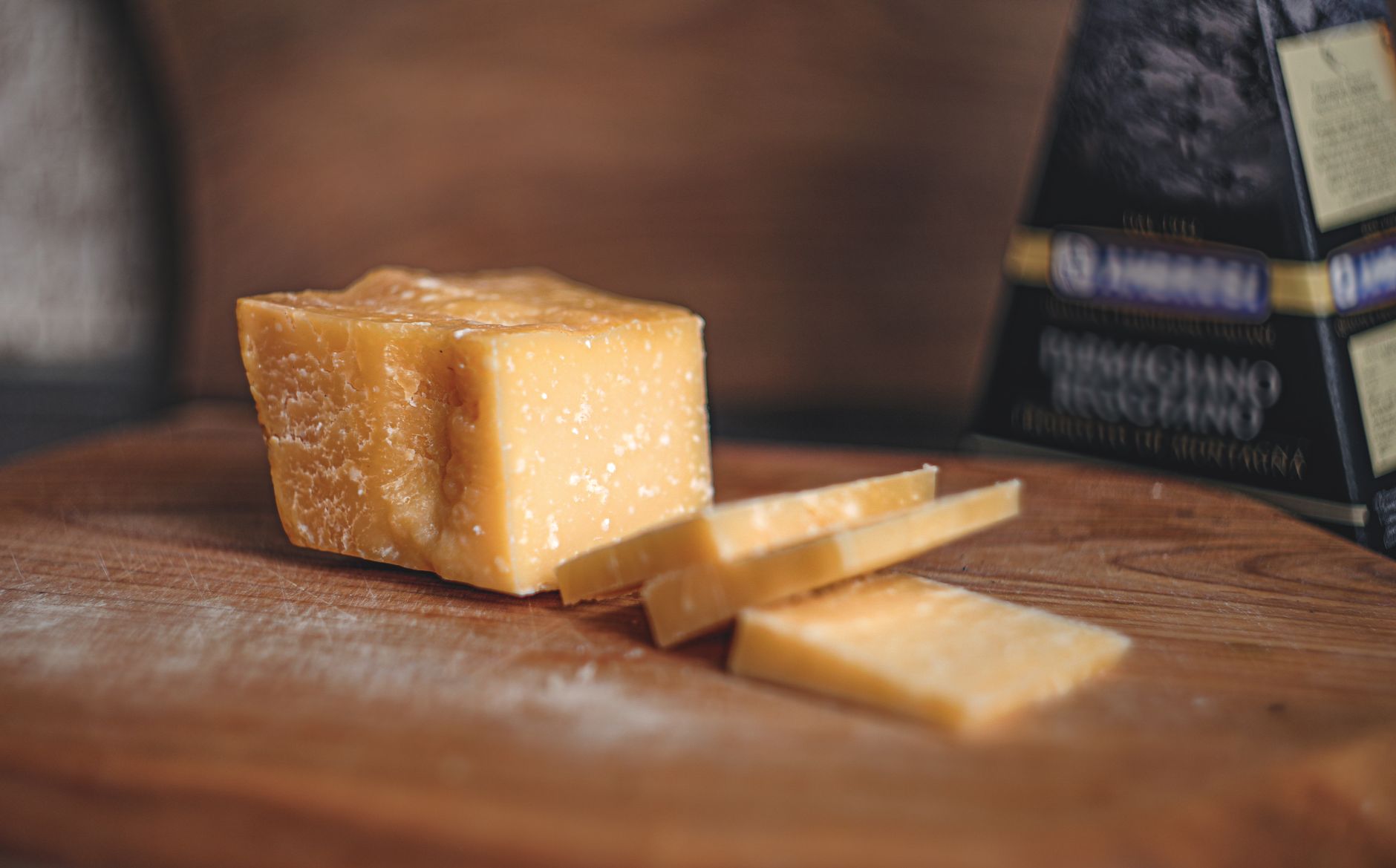
Hard cheese is easy to fake with vegetable fats, starch, or a heavy dose of preservatives instead of honest aging. Fortunately, spotting the difference doesn’t take much more than knowing which details on the label and on the wedge itself to check.
Start with the ingredient list
The first thing worth checking is the ingredient list on the package. A genuine hard cheese has a short one: milk, cultures, salt, rennet. If vegetable oils, palm oil, or its derivatives show up on the list, what you’re holding is a cheese product, not cheese — it can look similar on the shelf, but it usually falls short on flavor and texture and melts differently.
The name on the label
It’s worth reading the actual name on the package closely. If the front says “cheese” but the fine print somewhere says “cheese product” or lists milk fat substitutes among the ingredients, that’s a direct signal you’re looking at an imitation. Honest producers rarely hide this information outright, but it’s not always printed prominently.
Appearance and the cut
A good hard cheese should have an even, uniform interior with no cracks and no beads of moisture on the surface. Its color is usually cream to pale yellow — an unnaturally bright, deep yellow can sometimes point to added coloring. Small holes (eyes) are normal for many varieties and aren’t a defect; their number and size simply depend on the cheese’s style and aging process.
Smell and taste
A fresh, well-made hard cheese has a clean smell characteristic of its style — nutty, buttery, with a slight tang in more aged versions. A sharp ammonia smell or a rancid note usually means the cheese has been stored poorly or is starting to turn. On the palate, quality cheese shouldn’t taste bitter or feel rubbery — both are signs of a shortcut somewhere in production, whether it’s the ingredients or the process.
Firmness and aging
The longer a cheese ages, the firmer, drier, and more intensely flavored it typically becomes, while younger hard cheeses are softer, more pliable, and milder. Neither texture is inherently better — what matters is that the firmness matches the stated age. A cheese that’s suspiciously soft for its claimed aging, or one that’s crumbly and overly dry despite being labeled young, is worth a second look.
Storing cheese at home
Hard cheese keeps best in the fridge wrapped in cheese paper or parchment rather than tightly sealed plastic, which can trap moisture and speed up mold or off odors. If a spot of mold does show up on the surface, it’s usually enough to cut it away with an inch or so of margin — unlike soft cheeses, where mold spreads much faster below the surface.
Taste before you buy, if you can
If you have the option to taste a cheese before buying, it’s worth taking — flavor and texture are the most reliable indicators of quality, and no label can fake them. When tasting isn’t an option, sticking with producers you already trust and rereading the ingredient list every time helps, since recipes for the same product sometimes change without much notice.
Price as a rough guide
A hard cheese priced well below the market average is almost always a sign the producer is cutting corners somewhere — the quality of the milk, the aging time, or swapping in vegetable fat for part of the dairy fat. That doesn’t mean the priciest cheese on the shelf is automatically the best, but an unusually low price is worth treating with some suspicion.
Choosing a good hard cheese takes a little practice reading labels and judging appearance and smell, but it pays off — a genuinely well-made cheese stands out clearly, both cooked into a dish and eaten on its own.
 Share via email