Articles
Cabbage Family: Key Differences
2026-02-19
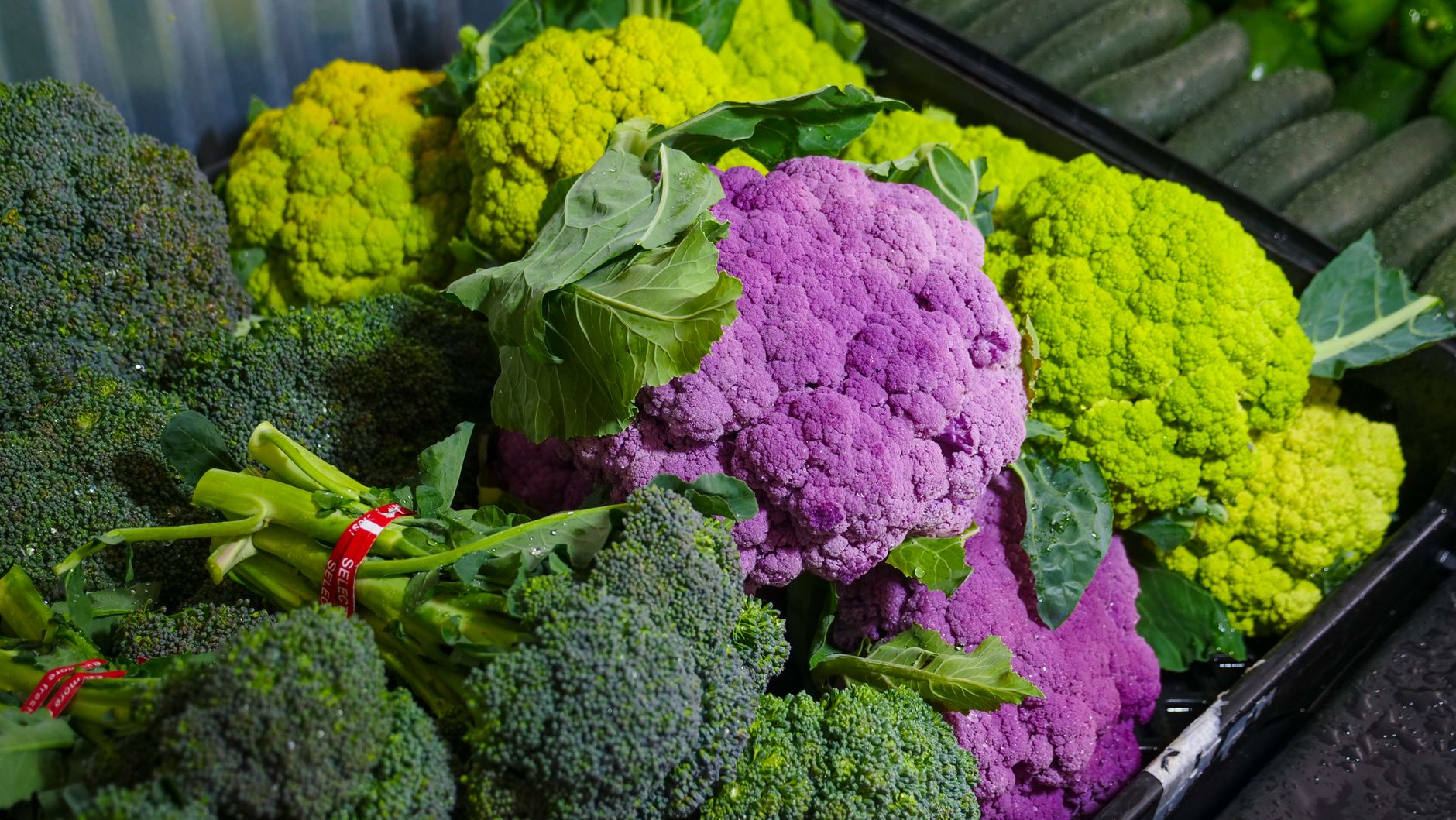
Green cabbage, broccoli, cauliflower, Brussels sprouts, kale, and even kohlrabi look nothing alike, yet they’re all the same botanical species, Brassica oleracea, shaped into different forms through centuries of selective breeding. That shared ancestry is why these vegetables carry a similar set of nutrients, even though their texture, flavor, and ideal cooking method vary widely.
One species, different plant parts
The differences between these vegetables essentially come down to which part of the plant breeders chose to emphasize over generations. Green and red cabbage are enlarged leaf buds, broccoli and cauliflower are underdeveloped flower clusters harvested before they open into blooms, Brussels sprouts are clusters of small buds growing along a tall stalk, and kohlrabi is a swollen stem. Kale sits closest to the wild ancestor plant, keeping the open, loose-leaf form rather than forming a tight head.
Green and red cabbage
The dense heads of green cabbage hold up well in storage and are especially suited to fermenting — the process that turns crisp leaves into tangy, probiotic-rich sauerkraut. Raw, it forms the base of dishes like coleslaw, and it softens and sweetens when braised or cooked low and slow. Red cabbage has a slightly denser leaf structure and its distinctive purple color comes from anthocyanins, pigments that also carry antioxidant properties.
Broccoli and cauliflower
Broccoli and cauliflower are botanically closer to each other than either is to green cabbage — both are immature flower clusters picked before they bloom. Broccoli is noticeably higher in chlorophyll and has a more pronounced, slightly bitter edge, while cauliflower is milder and more neutral, which is why it’s often used as a low-carb stand-in for mashed potatoes or rice. Both hold up well to roasting and sautéing, methods that bring out their natural sweetness more than boiling does.
Brussels sprouts
The small, tight heads of Brussels sprouts have a more concentrated, nutty flavor with a mild bitterness that mellows noticeably once they’re roasted to a golden edge. Cooking method matters more here than with most vegetables in this family: boiled whole, Brussels sprouts often taste bitter and waterlogged, while halved and roasted or pan-seared at high heat, they caramelize on the cut side and turn out completely different.
Kale and other leafy varieties
Kale doesn’t form a dense head at all and looks instead like large, sturdy leaves with ruffled edges. It holds up well to cooking, but it’s increasingly popular raw as well — often in salads, where the tough leaves are massaged briefly with oil and salt beforehand to soften their structure.
Choosing the right one for a dish
Picking which member of this family to use in a recipe comes down to more than flavor alone — it’s also about structure. The dense heads of green and red cabbage hold their shape well through long braises, broccoli and cauliflower show off their best qualities with a quick roast, and kale and Brussels sprouts especially benefit from the contrast between a crisp, seared edge and a softer center. That range within a single species is a good reason not to default to the same cabbage every time, and to rotate through the family instead.
 Share via email