Articles
Easter Table: Traditions and Recipes
2026-04-09
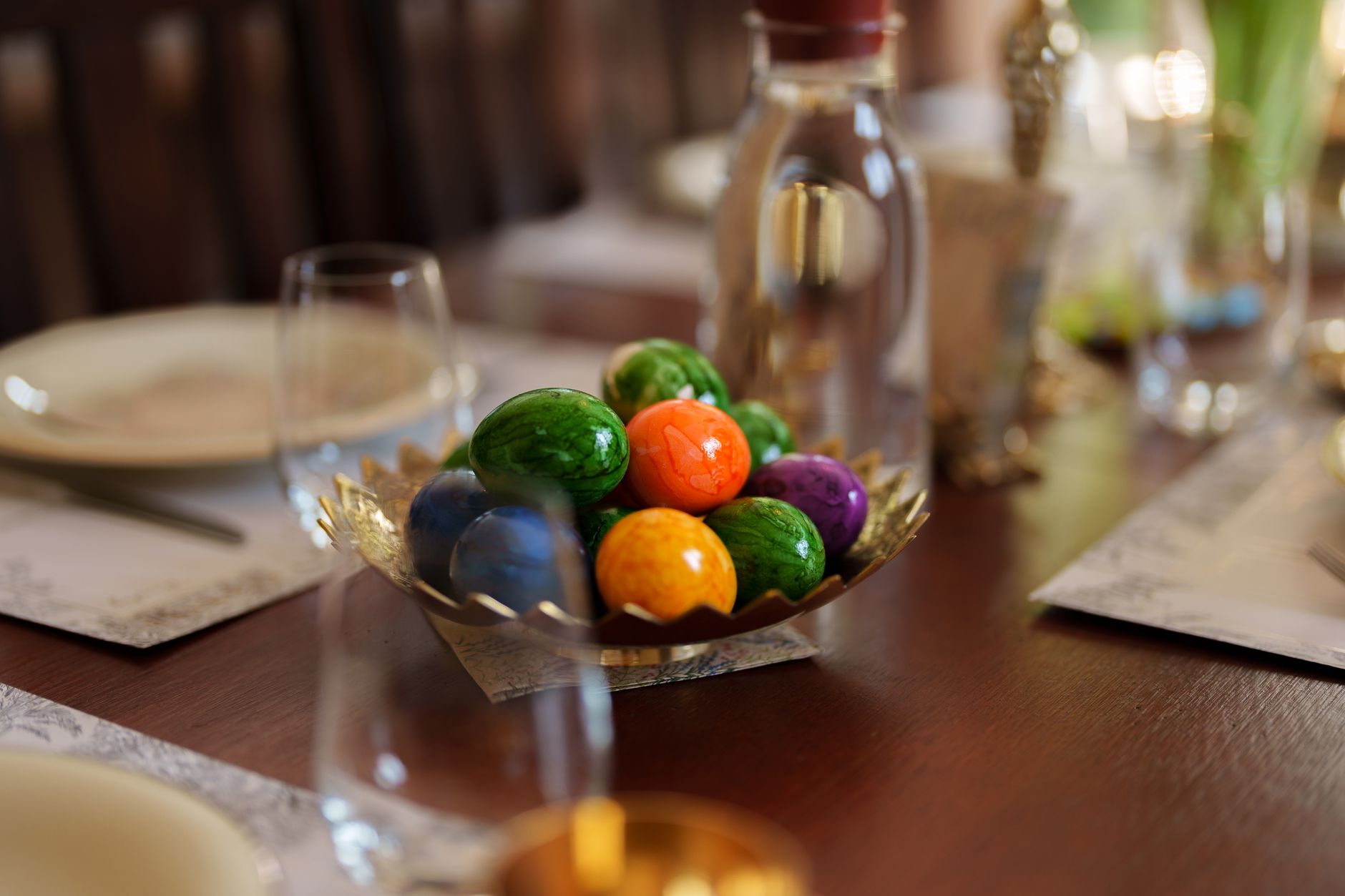
Easter is one of the biggest holidays of the year in the Orthodox calendar, and the table set for it matters almost as much as the midnight service itself. After weeks of Lenten fasting, the meal becomes a genuine celebration: dishes that haven’t been on the table in nearly two months suddenly reappear, arranged according to customs that go back centuries.
Three centerpiece foods
Kulich, a sweet cheese dish called paskha, and dyed eggs are the three staples that anchor an Orthodox Easter table. Kulich is a tall, cylindrical sweet bread, similar in spirit to Italian panettone, meant to echo the blessed bread shared at church. It’s baked tall, topped with white icing, and often finished with sprinkles. Paskha is made from strained curd cheese, butter, and dried fruit, pressed into a truncated pyramid shape using a special wooden or plastic mold — the flat top is meant to recall the tomb of Christ. Dyed eggs are the oldest of the three symbols, tied to the legend of Mary Magdalene presenting the emperor with a red egg and the words “Christ is risen.”
What to know before baking kulich
Kulich dough is enriched with butter, eggs, and sugar, which makes it slow and temperature-sensitive to work with. It typically needs two or three separate rises in a warm, draft-free spot before it goes into the pan. Tall, narrow molds — traditionally repurposed cans or special paper forms — give kulich its signature elongated shape. Doneness is checked with a wooden skewer, which should come out dry from the center. Once baked, the loaves are cooled lying on their side and turned periodically so the domed top doesn’t collapse under its own weight; icing goes on only after the bread has cooled completely.
Paskha: no-bake and cooked versions
There are two main ways to make paskha. The no-bake version blends curd cheese, butter, sugar or condensed milk, and dried fruit without any cooking — it comes together quickly but needs to sit under a weight in the fridge for at least a day so excess whey drains off and the mixture firms up. The cooked version is made over a double boiler with eggs and cream, which produces a denser paskha that holds its shape longer, though it takes more time and a careful hand to keep the eggs from scrambling.
Dyeing eggs the traditional way
Eggs get their color from everything between onion skins and food-grade dyes to natural colorants like beets, turmeric, or red cabbage. Onion skins are the most traditional route, producing a deep reddish-brown shade — the eggs are simmered directly in the skin broth, sometimes wrapped in thread or cloth with herb leaves pressed against the shell to leave a pattern. For a more even color, the skins are boiled separately first and the already hard-boiled eggs are dipped into the strained dye afterward.
What else belongs on the table
Beyond the three centerpiece dishes, an Easter table is typically heavy on meat and dairy, since Lent has just ended. Roast ham or cured pork, aspic, fresh salads with plenty of greens, and a spread of cheeses are all common. The table is usually decorated with signs of spring — sprouted wheat or oat grass, pussy willow branches — tying the holiday to the season it falls in. The blessed kulich, paskha, and eggs are traditionally the first things eaten, often right after returning home from the overnight service.
Planning the table without the last-minute scramble
To keep Easter from turning into an exhausting kitchen marathon, it helps to spread the cooking out over a few days. Kulich and paskha are both better made one or two days ahead: kulich stays soft and doesn’t go stale quickly thanks to all the butter and eggs in the dough, while paskha actually improves after a full day under weight in the fridge. Eggs can be dyed the evening before. That leaves the day of the holiday itself for hot dishes, roasts, and the fresh salads that don’t hold up to advance prep. Spacing things out this way means spending the actual holiday at the table with guests instead of stuck at the stove.
 Share via email