Articles
Secrets to Juicy Chicken Breast
2026-04-09
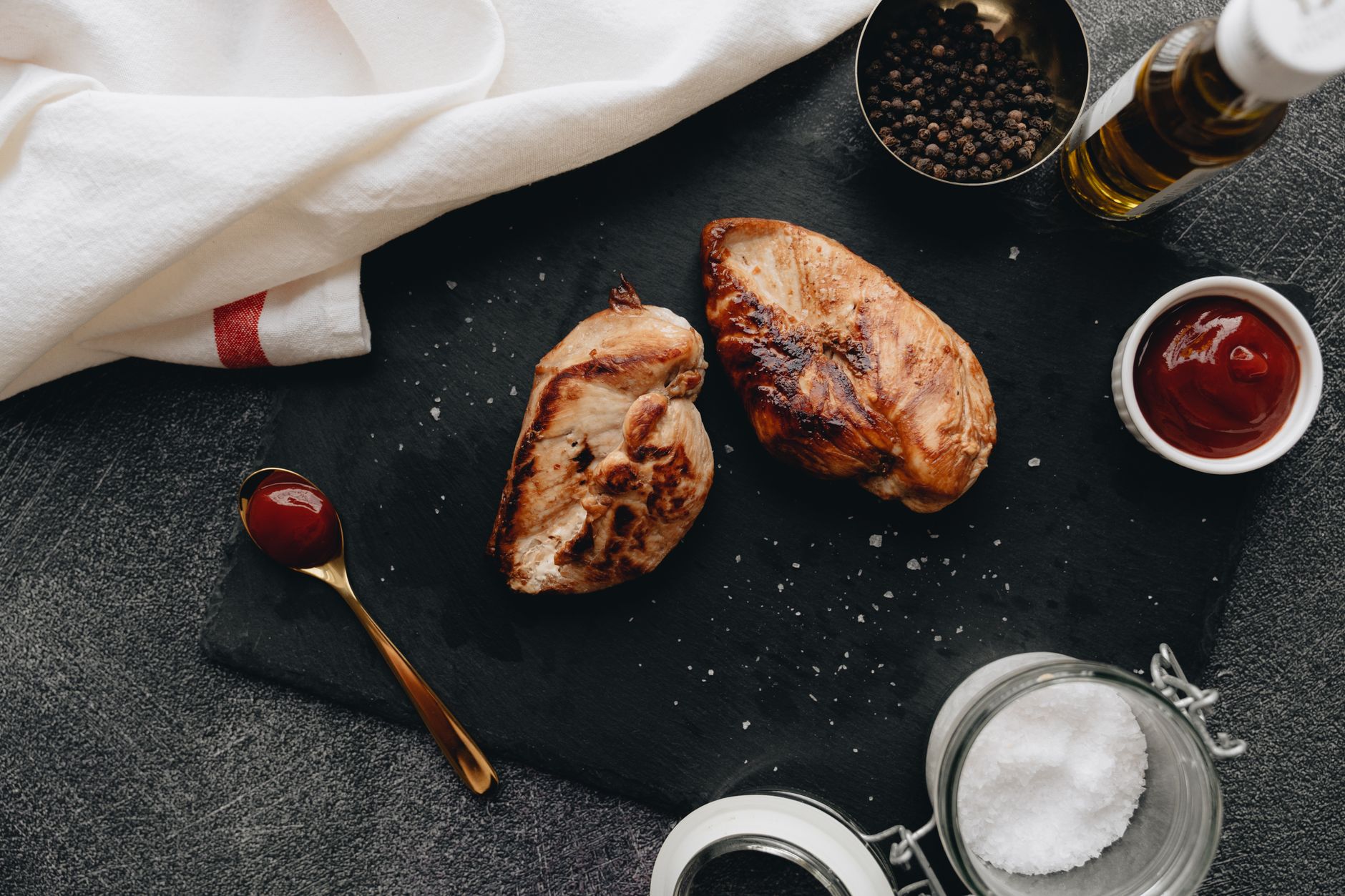
Almost everyone keeps chicken breast in the fridge — it’s cheap, lean, and seems like it should be foolproof to cook. And yet it’s the cut most likely to end up dry and stringy on the plate. The problem usually isn’t the meat itself but a couple of common mistakes in how it’s handled, and both are easy to avoid once you know the tricks.
Why it dries out so easily
Chicken breast has almost no fat or connective tissue, the stuff that in other cuts melts down during cooking and helps hold moisture in from the inside. That means breast meat has zero tolerance for extra time on the heat: once the internal temperature crosses a certain point, the muscle fibers contract sharply and push moisture out, leaving the meat dry.
Brining: a simple, reliable fix
One of the most effective things to do before cooking at all is a short brine. A solution of about a tablespoon of salt per liter of water, applied for 20-30 minutes, slightly alters the protein structure at the surface of the meat, which lets the fibers hold on to more moisture even if the meat gets a bit overcooked. A stronger brine with added sugar, left for 1-2 hours, works even better, especially before roasting a whole breast.
Pounding it to an even thickness
Chicken breasts are almost always thicker on one end than the other, so the thin end dries out while the thick end is still cooking through. Lightly pounding the meat to an even thickness with a meat mallet, or butterflying the breast into two thinner halves, fixes this and also cuts down the overall cooking time.
Marinades: acid or starch
Marinades with a bit of acid — lemon juice, yogurt, buttermilk — soften the surface fibers slightly and help the meat hold on to its juices while cooking, but leaving chicken in an acidic marinade for more than a couple of hours backfires: too much acid actually breaks down the texture and makes it mushier. Another approach, common in Chinese cooking, is “velveting” — coating the meat in a thin layer of cornstarch, sometimes mixed with egg white, which seals in moisture during a quick, hot stir-fry.
Temperature is the deciding factor
Overheating is, by far, the most common reason chicken breast turns out dry. Chicken is safe to eat at an internal temperature of 74°C (165°F), but the gap between “just right” and “overdone” is often only a few degrees when the pan or oven is running hot. The safest bet is pulling the chicken off the heat a touch early, around 70-71°C (158-160°F), checked with an instant-read thermometer — the temperature keeps rising a few more degrees on its own as the meat rests.
The cooking method matters too
Searing over medium rather than high heat, with a lid on, lets the meat cook through evenly instead of drying out on the outside before the center catches up. For oven roasting, covering the meat with foil for the first part of cooking helps. Poaching or steaming are the gentlest methods of all — simmering chicken gently in broth, rather than at a hard boil, barely costs it any juiciness.
Resting and slicing it right
Cooked chicken needs about 5 minutes to rest before slicing — that’s how long it takes for the juices that pooled in the center under heat to redistribute evenly through the fibers. Cut into it right away and those juices just run out onto the cutting board. Once it’s rested, slice against the grain: shorter individual fibers make each bite feel more tender on the tongue, even if the chicken wasn’t cooked absolutely perfectly.
 Share via email