Articles
Green and Black Olives: The Difference
2026-05-16
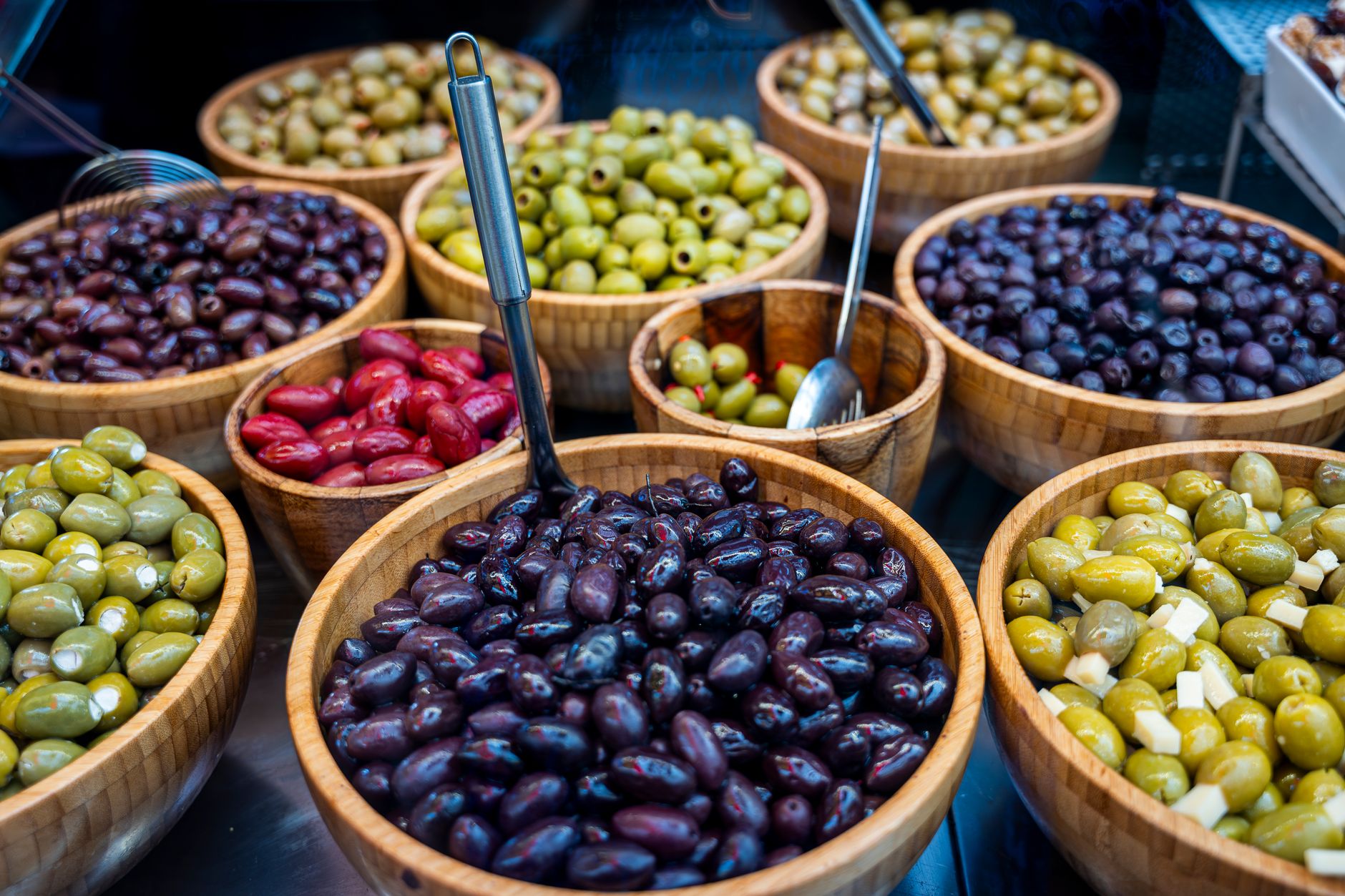
Green and black olives sit side by side on nearly every antipasto plate and grocery shelf, and it’s easy to assume they come from entirely different trees. In reality, they’re the same fruit from the same species of olive tree — the difference comes down almost entirely to when the fruit was picked.
It’s about ripeness, not variety
An olive tree produces fruit that gradually shifts color as it ripens: from green to burgundy, to purple, and eventually to a deep, near-black shade. Green olives are simply fruit harvested early, before that color change really gets underway. Black olives are the same fruit left to ripen longer on the branch, which is what gives them their dark color. A single tree, and a single variety, can produce both — the harvest timing is what decides the outcome.
Why raw olives are inedible
Fresh olives, green or dark, are bitter and essentially inedible straight off the branch because of a natural compound called oleuropein. That’s why every olive sold commercially has been processed first — either brined and fermented over an extended period, or treated with a lye solution to strip out the bitterness and make the fruit palatable. This curing process is responsible for a large part of the final flavor.
Not every black olive ripened naturally
Here’s an important caveat: a lot of the canned black olives on supermarket shelves never actually ripened to black on the tree. Many are green olives that get artificially oxidized and darkened during processing — a common practice, especially for cheaper canned varieties. These tend to taste milder and more neutral than genuinely tree-ripened olives, which are more often sold cured or brined in bulk rather than canned.
Differences in taste and texture
Green olives are typically firmer and denser, with a sharper, slightly bitter or briny flavor — their brine is often spiked with herbs, garlic, lemon, or chili. Black olives tend to be softer and milder, with a more pronounced oiliness, which makes sense since the fruit accumulates more oil as it ripens. That’s why black olives are often associated with a richer, fattier finish, while green olives read as fresher and sharper.
Nutritionally, they’re essentially equal
There’s no meaningful nutritional gap between the two: both are rich in monounsaturated fat (mostly oleic acid), and both contain vitamin E along with plant-based antioxidants. Olives are fairly calorie-dense thanks to their fat content, and because of the brine and curing process, they’re also fairly high in sodium — something worth keeping in mind if you’re watching your salt intake.
How they’re used in the kitchen
Green and black olives tend to play different roles in cooking, though there’s no strict rule. Green olives, especially ones stuffed with almonds, lemon, or pepper, are more often served on their own as a snack or added to Mediterranean salads, pasta, and sauces like tapenade. Black olives show up more often as a garnish on canapés and open sandwiches, tossed whole into salads, or scattered on pizza — their milder flavor blends in rather than competing with everything else on the plate.
What to look for when buying
If a recipe depends on a firm, snappy texture — a salad where the olives shouldn’t fall apart when sliced — green olives are the better pick. If you want something softer and milder for a garnish or a filling, go with black olives. It’s worth checking the label: ferrous gluconate on the ingredient list is a reliable sign that the black olives were artificially darkened rather than tree-ripened. Either way, both are perfectly safe and equally nutritious — the choice usually comes down to taste and what the dish calls for.
 Share via email