Recipes
Shortbread Cookies
2026-04-30
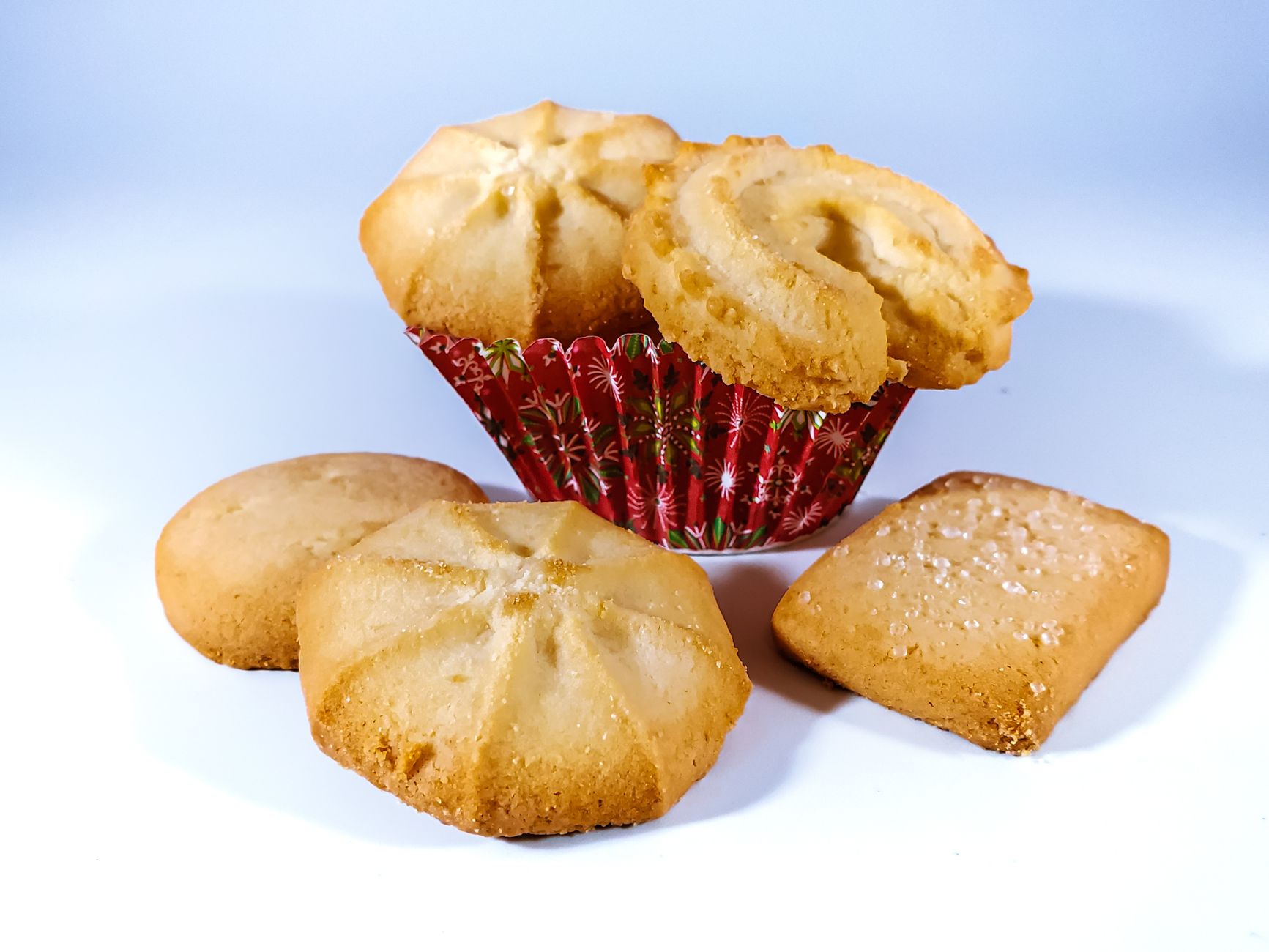
Shortbread is one of those rare cases where four or five ingredients from an ordinary pantry turn into something you’d happily set out on a holiday table. The secret isn’t a complicated technique — it’s the right ratio of butter to flour, which is exactly what gives shortbread its signature crumbly texture.
Why butter is the star ingredient
Shortbread gets its name from the texture that comes from using a generous amount of butter relative to flour. Use good-quality butter and make sure it’s fully at room temperature before you start — cold butter doesn’t cream properly and won’t give the dough the airiness it needs at this stage. Beat the butter and sugar until light and pale, but not for too long, or the finished cookies can end up denser than you want.
Why chilling the dough matters
Don’t skip the chilling step, even if you’re eager to get to baking. Cold dough is much easier to roll out, sticks less to the work surface, and holds its shape better when cutting out shapes. If the dough starts warming up and getting sticky while you work, pop it back in the fridge for a few minutes.
Thickness and shape
How thick you roll the dough directly affects the final texture: thinner cookies turn out crisper, while thicker ones are more crumbly and softer in the middle. For classic shortbread, something in between — around 5-7 mm — usually gives the best of both worlds: a pleasant crunch at the edges and a tender center.
How to avoid overbaking
The biggest mistake with shortbread is leaving it in the oven too long while waiting for an obvious golden color. The cookies keep gently cooking after they come out, thanks to residual heat, so pull them as soon as the edges are just barely turning golden and the centers still look pale.
Storage and variations
Finished cookies keep well in an airtight tin or container for one to two weeks without losing their crumbly texture. The dough also freezes beautifully as a disc — pull it out ahead of time, thaw it in the fridge, and bake fresh cookies whenever you like. The classic recipe is easy to riff on too, with lemon zest, a bit of cocoa powder, or a dip in melted chocolate once the cookies have cooled.
Ingredients
- 200 g unsalted butter, room temperature
- 100 g powdered sugar
- 300 g all-purpose flour
- pinch of salt
- 1 tsp vanilla extract or vanilla sugar
- 1 egg yolk (optional, for a firmer texture)
Instructions
- Beat the softened butter with the powdered sugar using a mixer until light and fluffy, about 2-3 minutes.
- Add the vanilla and, if using, the egg yolk, and mix to combine.
- Sift in the flour with the salt and mix just until the dough comes together — don’t overwork it.
- Shape the dough into a disc, wrap it in plastic, and chill in the refrigerator for 30-40 minutes.
- Roll the dough out to about 5-7 mm thick and cut out shapes with cookie cutters.
- Arrange the cookies on a parchment-lined baking sheet, leaving a little space between them.
- Bake at 180°C (350°F) for 12-15 minutes, until just barely golden at the edges.
- Let the cookies cool on the baking sheet for 5 minutes, then transfer to a wire rack to cool completely.
 Share via email